
AI Agent Security & Supply Chain
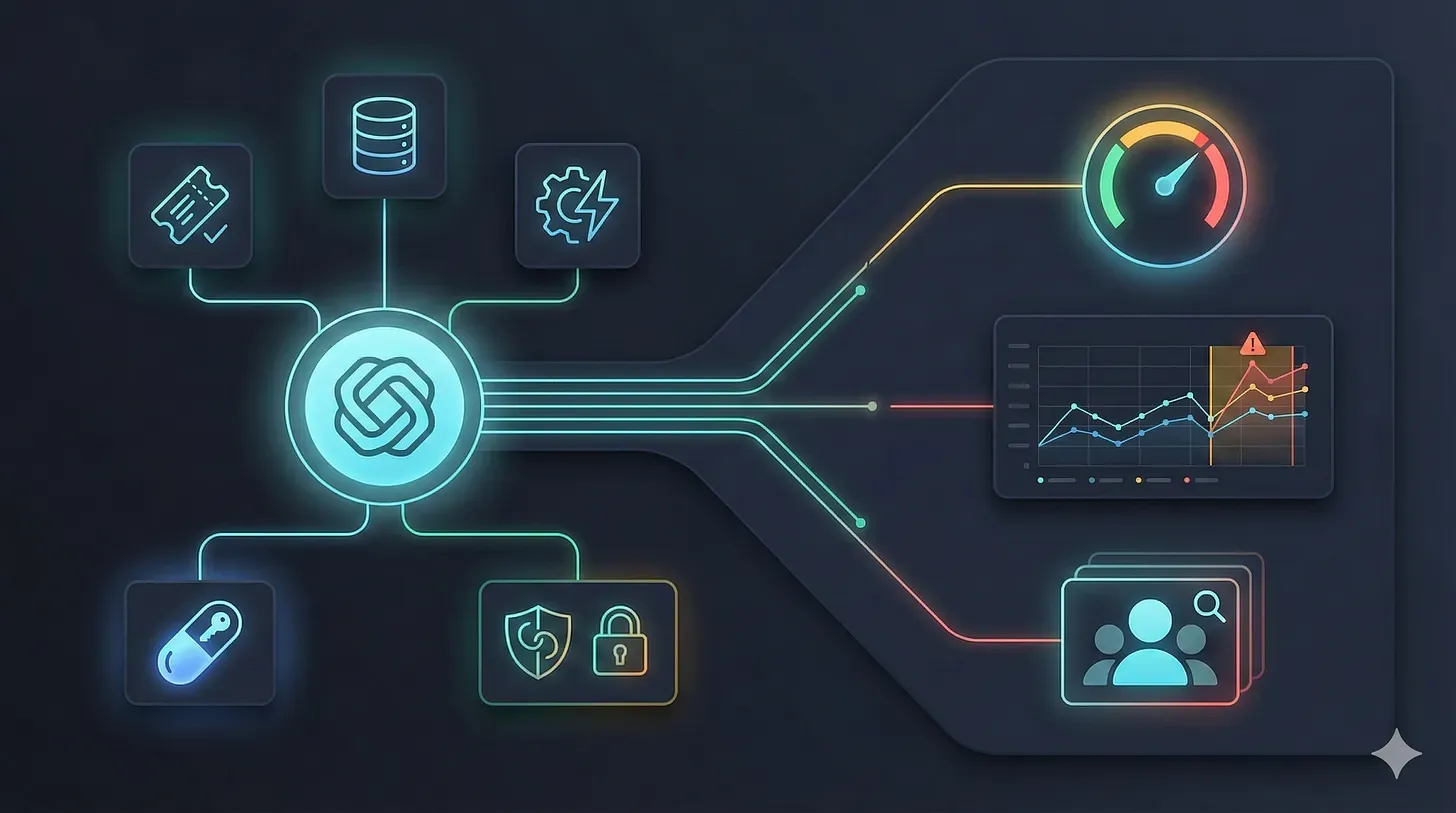
Protecting Tool Integrations and Secrets in Agentic Systems
Most agentic AI failures won’t come from the model.
They’ll come from what the agent is allowed to touch.
- API
- Databases
- Internal Tools
- Production credentials
The moment you let an agent call tools, you’ve created a new supply chain and most teams are securing it like a demo script.
This post is a practical security playbook for agentic systems:
- what the real threat model looks like,
- where teams are getting this wrong today,
- and how to design tool access, secrets, and auditability without killing velocity.
Thanks for reading Autonomous AI Architect! Subscribe for free to receive new posts and support my work.
Why agent security is fundamentally different
Traditional services have:
- static code paths,
- fixed credentials,
- predictable call graphs.
Agents don’t.
What Agents have:
- decide which tools to call at runtime,
- compose calls dynamically,
- reason over retrieved context,
- and can be influenced by user input, memory, or retrieved data.
That means security boundaries move from code to runtime decisions.
If you secure agents like normal microservices, you will miss the real risks.
The real threat model
Most teams worry about:
- prompt injection,
- jailbreaks,
- bad outputs.
Those matter, but the bigger risks live elsewhere.
Here are the threats that actually cause damage:
• Over-privileged tools
One tool token can read prod data, write tickets, trigger payments.
• Long-lived credentials
API keys sitting in env vars, usable by any agent step.
• Implicit tool trust
“If the agent calls it, it must be okay.”
• No action provenance
You can’t answer: why was this call made, by which agent, with what context?
• Silent blast radius
A compromised prompt → a valid tool call → irreversible action.
This is a supply-chain problem, not a prompt problem.
Principle #1: Tools are capabilities, not functions
The biggest mindset shift:
A tool is a capability with a blast radius, not a helper function.
Every tool should answer three questions:
- What exact actions can it perform?
- Under what conditions is it allowed?
- How is its use audited and revoked?
If you can’t answer those clearly, the tool is unsafe.
Designing capability-scoped tools
Instead of one “admin” tool, split capabilities aggressively.
Bad:
billing_tool.process_payment(amount, user_id)
Better:
billing.create_refund_request(max_amount=₹5000)billing.read_invoice(invoice_id)billing.escalate_to_human(reason)
Rules:
- Prefer read over write
- Prefer propose over execute
- Prefer bounded actions over free-form ones
The goal is to make unsafe actions impossible, not just discouraged.
Principle #2: Secrets must be ephemeral and scoped
If an agent can access a long-lived secret, assume it will leak eventually.
Agent-safe secret handling looks like this:
• Short-lived credentials (minutes, not days)
• Issued per tool invocation, not per service
• Scoped to a single action
• Revocable independently of the agent runtime
Never:
- put raw API keys in prompts,
- store secrets in agent memory,
- reuse service-level credentials for agents.
Treat agents like untrusted workloads that borrow permissions briefly.
Tool invocation flow
A secure tool call should look like this conceptually:
- Agent proposes an action
- Policy engine evaluates:
- agent identity
- requested capability
- context (intent, risk level)
- Short-lived credential is minted
- Tool executes with that credential only
- Full trace is recorded and signed
This extra hop is what saves you during incidents.
Principle #3: Explicit approval for high-impact actions
Some actions should never be fully autonomous.
Define a clear line.
Always require human approval for:
- billing changes,
- account deletion,
- permission escalation,
- data exports,
- irreversible side effects.
The agent’s job is to:
- gather context,
- propose the action,
- explain why.
Humans approve or reject.
This is not a failure of autonomy, it’s good system design.
Supply chain thinking for agents
Ask yourself:
- Where do tools come from?
- Who owns them?
- How are they versioned?
- Can a tool change behavior without review?
Best practices:
- Treat tool definitions like code (PRs, reviews, versioning)
- Pin tool versions for releases
- Log tool schema + hash with every agent run
- Break builds when tool contracts change unexpectedly
Your agent supply chain includes:
- prompts
- tools
- retrieval sources
- evaluators
- deployment config
Secure all of it, or none of it matters.
Auditability: reconstruct every action
For every tool call, you should be able to answer:
• Which agent made this call?
• On behalf of which user/request?
• With what intent and context?
• Using which tool version?
• Approved by whom (human or policy)?
If you can’t reconstruct this, you don’t have auditability you have logs.
Store:
- agent identity
- prompt version
- retrieved documents (hashes)
- tool name + parameters
- credential scope
- evaluator / policy decision
This is essential for:
- incident response
- compliance
- trust with users
Common anti-patterns to avoid
I see these repeatedly in real systems:
• One super-tool that does everything
• Static API keys shared across agents
• Tool calls hidden inside prompts
• No separation between “suggest” and “execute”
• No way to revoke access without redeploying
If you recognize your system here, pause rollout and fix this first.
A simple checklist you can copy
Before letting an agent touch production tools:
• Each tool has a narrow, explicit capability
• High-risk actions require human approval
• Credentials are short-lived and scoped
• Tool invocations are policy-gated
• Full audit trail exists for every action
• Tool definitions are versioned and reviewed
If any item is missing, you are taking on silent risk.
How this fits with evaluation and safety
Security, evaluation, and observability are one system.
Evaluators tell you:
- whether an action was correct or safe.
Security controls ensure:
- unsafe actions can’t happen in the first place.
Observability lets you:
- prove what happened when things go wrong.
Don’t build these in isolation.
The real takeaway
Agentic systems don’t fail because they’re too autonomous.
They fail because we give them too much power, too cheaply.
Secure agent design is not about distrusting AI.
It’s about designing capabilities that fail safely.
If your agent can’t do damage, you don’t have to rely on hope.